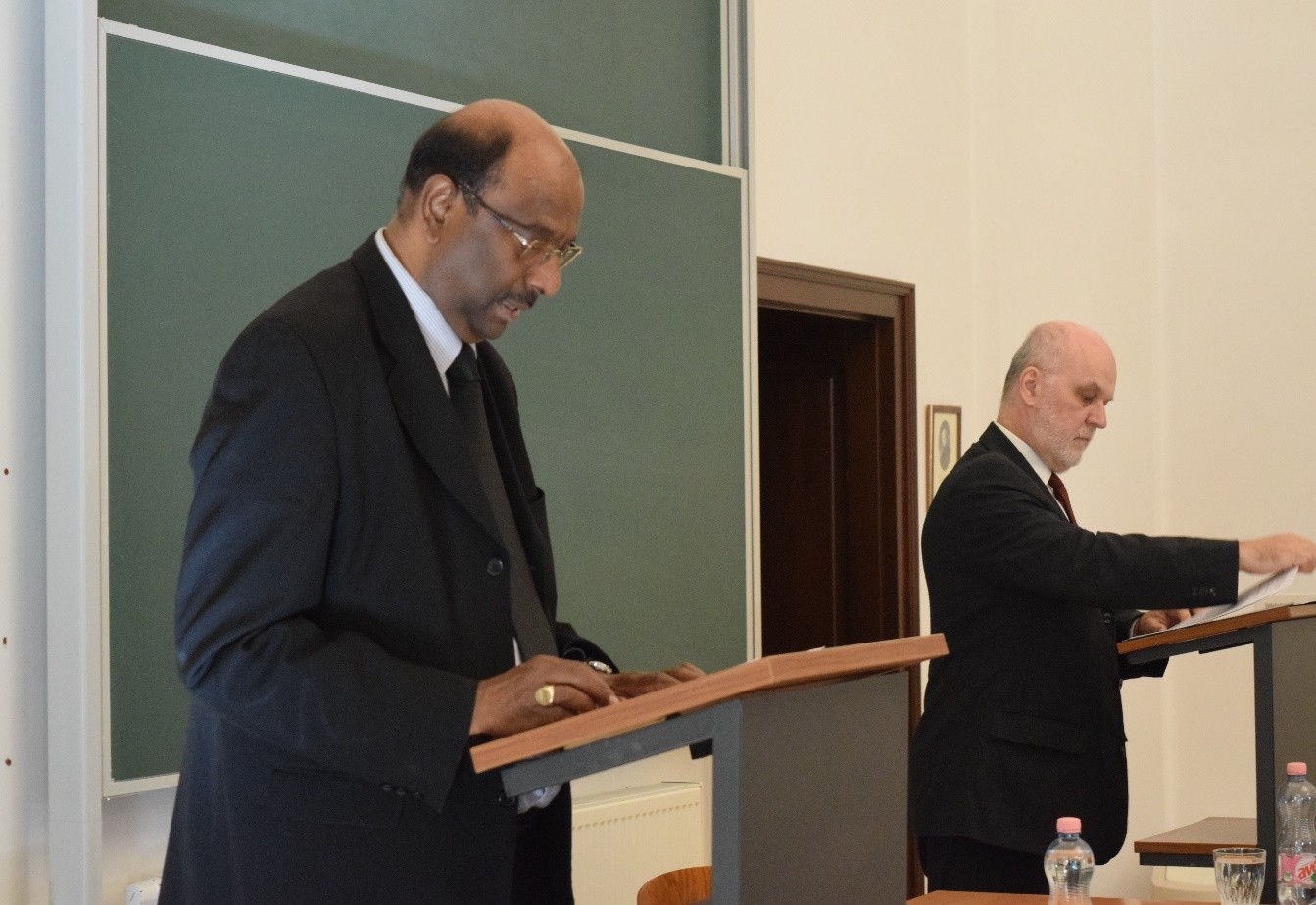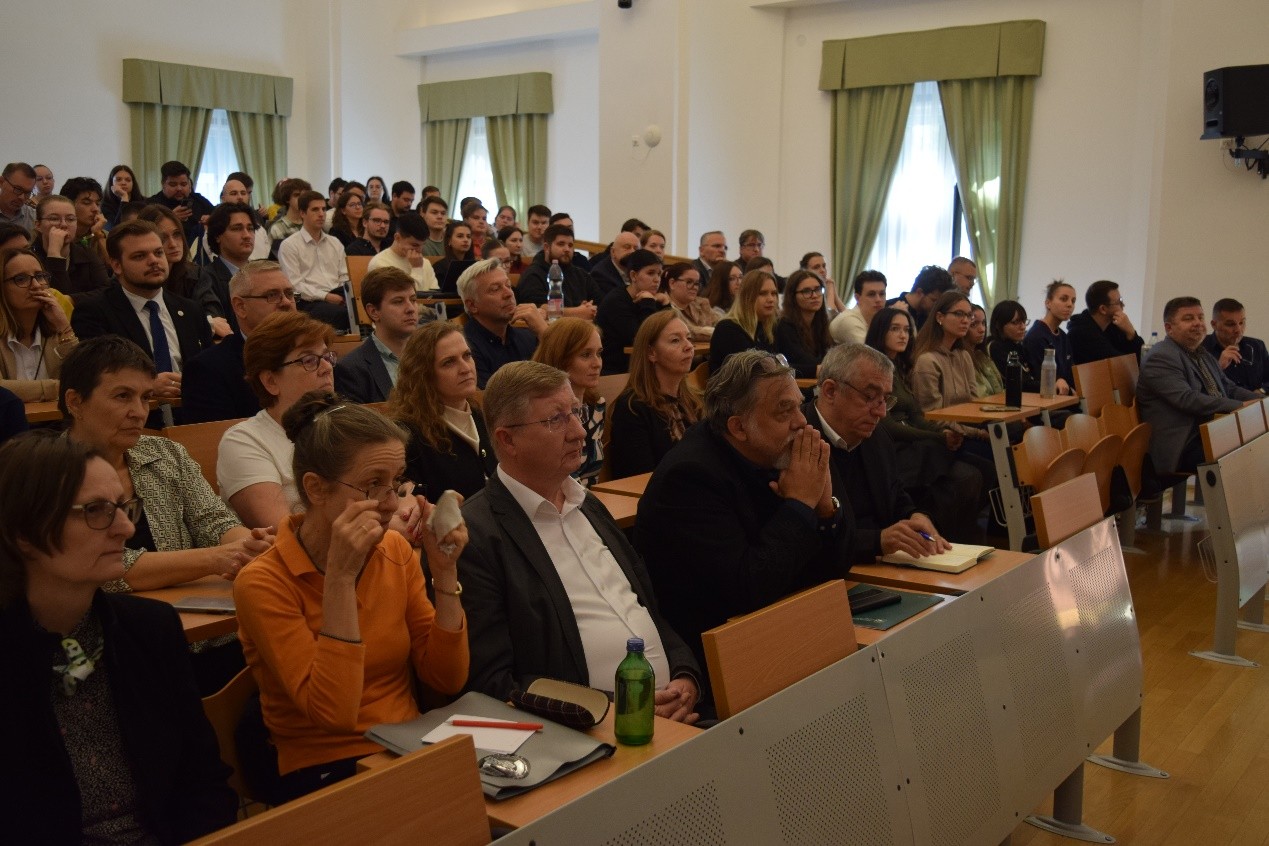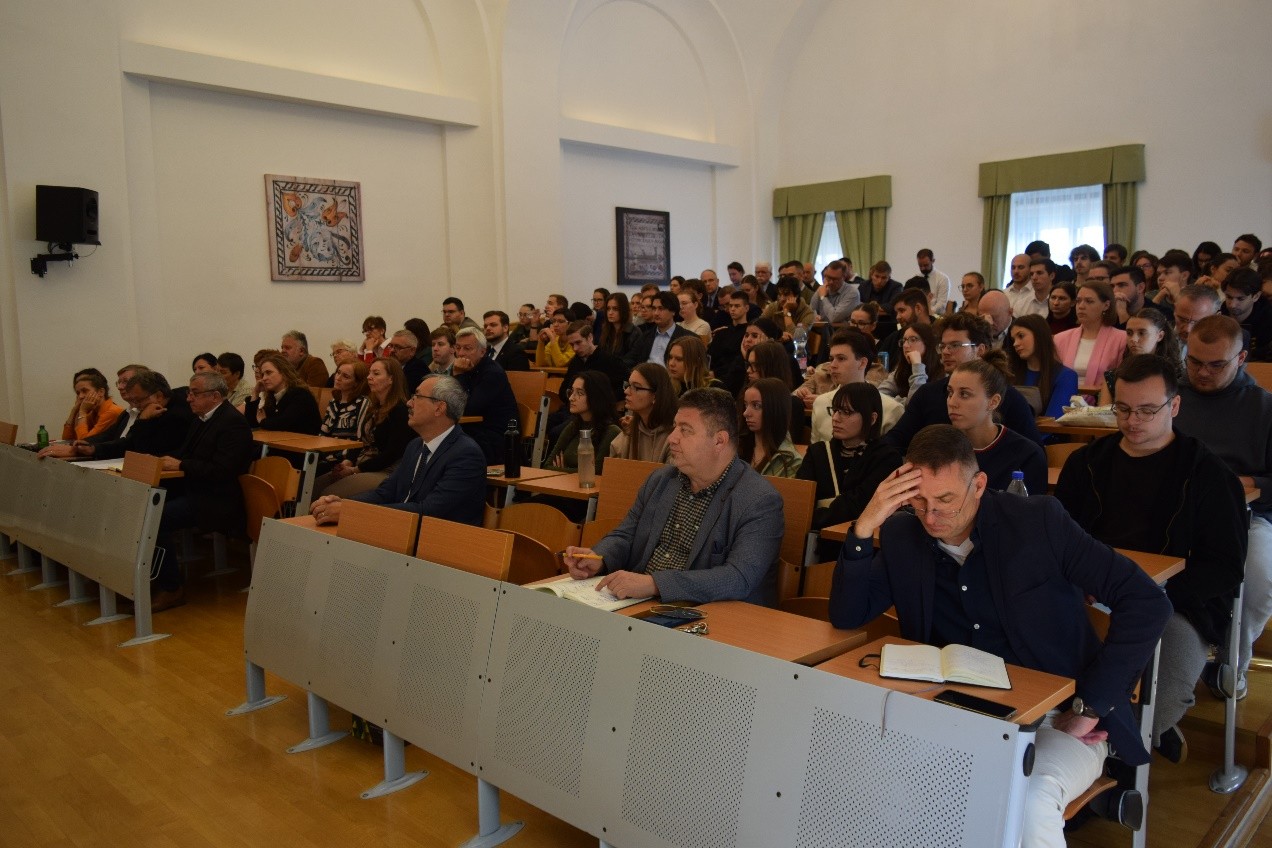
Before the lecture, Rector Dr. Zoltán Kustár introduced the speaker to the audience, revealing that Jerry Pillay—an honorary doctor of our university—has attended papal audiences seven times since assuming the role of General Secretary in 2023. As his presentation demonstrated, he travels extensively to conflict-ridden regions across the globe, driven by the very mission that formed the subject of his talk. (The audience listened to the lecture with simultaneous interpretation provided by Dr. Gábor Ittzés.)
Jerry Pillay began his presentation by describing the “polycrisis” defined by the World Council of Churches in 2022. According to this definition, the simultaneous presence of five major crises can be observed in our world today:
1) accelerating climate change;
2) a global, unjust economic order;
3)the erosion of the enforcement of human rights, which can affect the dignity of ethnic, religious, and sexual minorities alike;
4) a crisis of governance, the weakening of democratic institutions, and the rise of authoritarian regimes;
5) the spread of violence, manifesting both within countries and in international relations.
The Christian world can confront this complex crisis “only by bearing witness to the lordship of Jesus Christ,” the speaker emphasized. Speaking on the changing nature of the Church’s mission, the speaker noted that “recent developments in thinking about mission and evangelism can act as a catalyst for contemporary churches, particularly in clarifying their fundamental role and defining their mission and ministry both in and towards the world.” He emphasized that “the Church is not the sender but the sent… its mission is not secondary to its essence; the Church exists in mission and builds itself up for the sake of that mission.” In this context, the speaker cited the document published in 2012, *Together towards Life: Mission and Evangelism in Changing Landscapes*: “The Church is God’s gift to the world, intended to transform it towards the Kingdom of God. Its mission is to bring new life and proclaim God’s loving presence in our world.”
Speaking about the role of the church, he emphasized that “the church must stand where God stands and must not become intertwined with the rich and the powerful. The language of love manifests itself above all in standing up for justice, championing the cause of the poor, and offering hope amidst injustice and suffering.”
Reflecting self-critically on the unrest in our world, he stated: “…even the churches hold differing views; we are all too captive to religious nationalism, and often—whether justifiably or not—we become tools of states and politicians.”
Speaking of discipleship, he remarked: “Our discipleship—even when we strive to transform the unjust systems of the world—must be grounded in our own transformation, achieved through a continuous journey of conversion toward God’s love in Christ, toward the needs of the world, and toward the demands of love.”
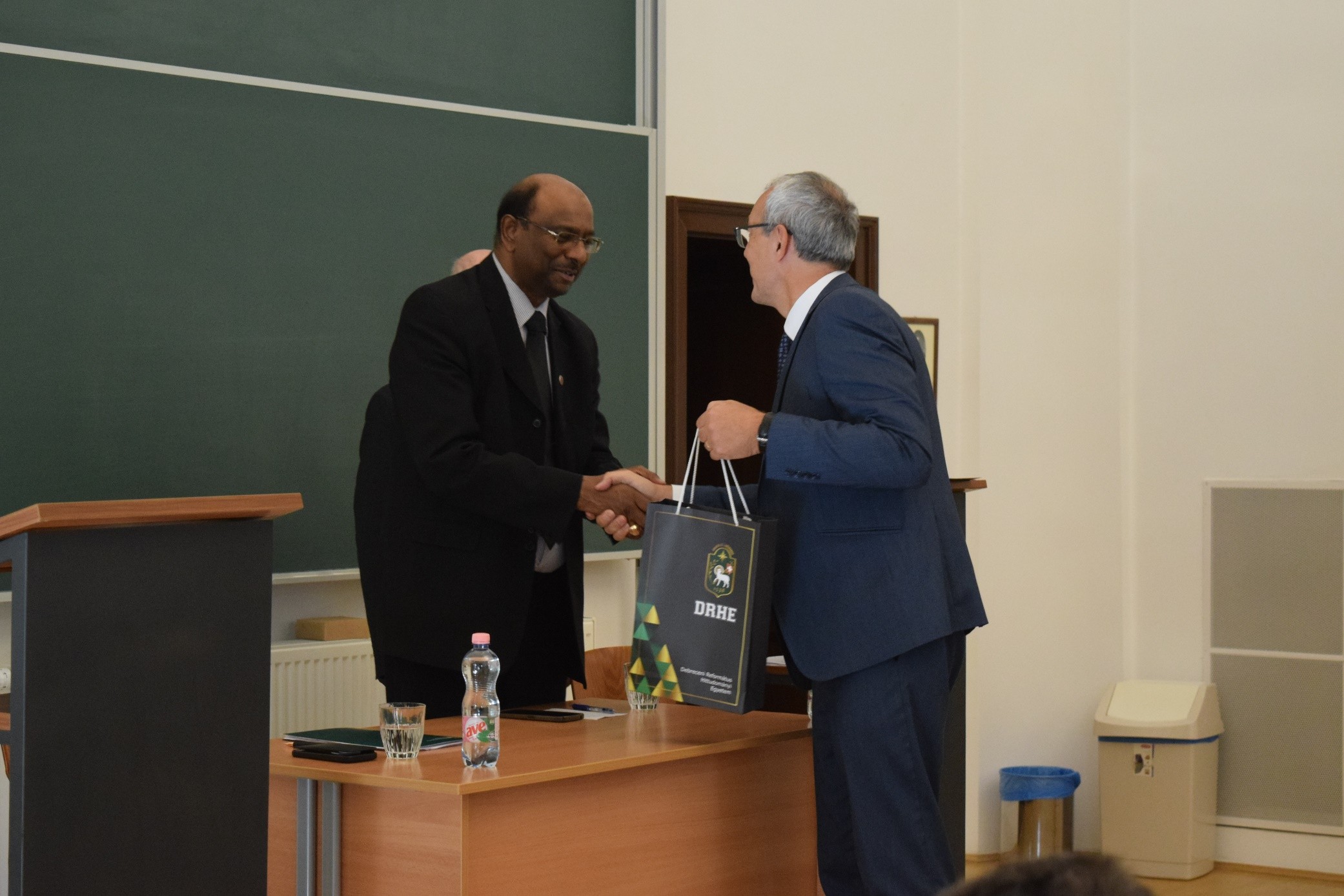
Following questions from the audience, the event concluded with closing remarks from the Rector, who expressed his appreciation for the lecture and presented gifts from the university to General Secretary Jerry Pillay.